

A sharply defined beard line, a smoother chest, or less time spent managing back hair can make a noticeable difference in how you feel in tailored clothing, at the gym, or on holiday. Laser hair removal for men is not about changing your appearance to fit a standard. It is a considered way to reduce unwanted hair in areas that feel difficult, time-consuming, or irritating to maintain.
For men, the treatment requires a more individualized approach than many people expect. Hair density, skin tone, hormonal patterns, and the size of the treatment area all influence the technology selected, the number of sessions recommended, and the pace of visible change.
How Laser Hair Removal for Men Works
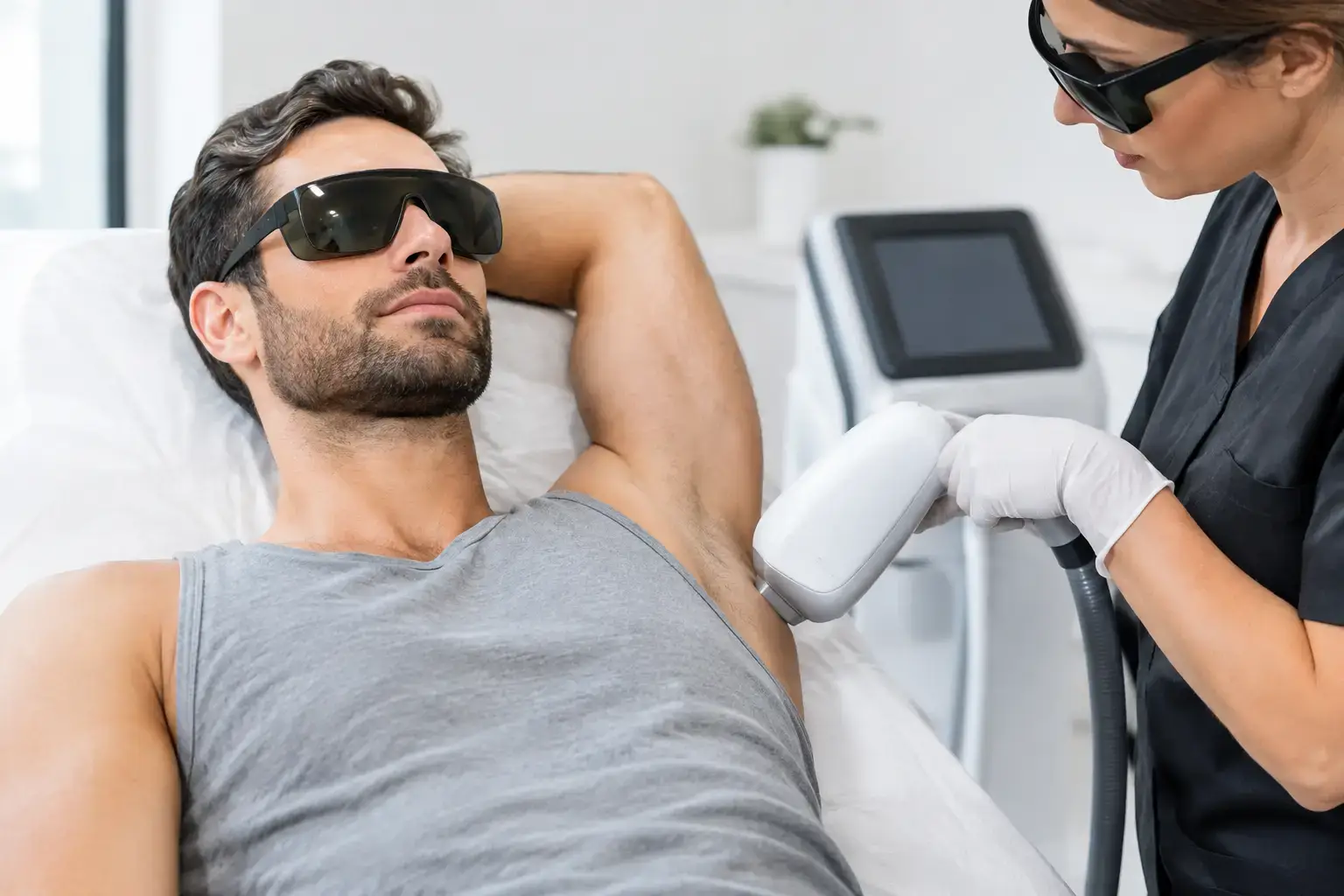
Laser hair removal uses concentrated light energy to target pigment within the hair. That energy travels down the hair shaft toward the follicle, where it disrupts the follicle’s ability to produce new hair over time. The surrounding skin is protected through carefully selected settings and integrated cooling methods.
The key word is reduction. Hair grows in cycles, and laser energy is most effective when a follicle is in its active growth phase. Because not every hair is in that phase at once, treatments are spaced several weeks apart to address new cycles as they emerge.
Men often have darker, coarser hair and greater density across areas such as the chest, abdomen, shoulders, and back. These characteristics can make the hair a suitable target for laser technology, but they also mean treatment plans should be calibrated carefully. A consultation helps determine the appropriate laser platform, settings, and interval between appointments for your skin and hair profile.
Which Areas Do Men Commonly Treat?
The right treatment area is personal. Some patients want a cleaner neckline between barber appointments. Others are looking for a more comfortable solution for recurring ingrown hairs on the neck, torso, or bikini line. Larger areas may be chosen for practical reasons, particularly when shaving or waxing becomes inconvenient.
Common areas include the back and shoulders, chest and stomach, arms, underarms, beard line, neck, ears, hands, and intimate areas. Each presents a different treatment experience. A beard-line treatment can be highly precise and designed to preserve the preferred facial-hair shape, while a back treatment generally requires a broader approach and more appointment time.
It is also possible to treat selectively rather than remove hair across an entire area. For example, a patient may choose to reduce density on the chest while retaining a natural amount of hair, or focus only on the upper back and shoulders. A well-designed plan accounts for how the area will look as hair becomes finer and less frequent.
Who Is a Good Candidate?
Suitability depends on the relationship between your skin tone and hair color, as well as your health history and recent skin exposure. In general, hair with more pigment responds more readily than very light blond, gray, white, or red hair. Advances in laser technology have broadened treatment options for a range of skin tones, but device selection and operator expertise remain central to a thoughtful treatment plan.
Your clinician should also ask about recent tanning, sun exposure, active skin irritation, medications, and any history of pigmentation changes or scarring. In Dubai, where regular sun exposure is part of daily life for many residents, this conversation is particularly relevant. Tanned or sun-sensitized skin may require treatment to be postponed or settings to be adjusted.
Hormonal influences can affect results as well. Areas driven by androgen activity, including the face, neck, chest, and abdomen, may require ongoing maintenance over time. That does not make treatment ineffective. It simply means expectations should reflect the biology of hair growth rather than a fixed promise of permanence.
What Does a Treatment Course Look Like?
A treatment course commonly involves multiple sessions, often scheduled about four to eight weeks apart depending on the body area and your individual hair cycle. Facial areas may be treated more frequently than the back or legs because they tend to cycle differently. Your provider will recommend a schedule based on response, density, and the treatment goal.
Before each appointment, the area is usually shaved so the laser can direct energy beneath the surface rather than singeing visible hair. Waxing, plucking, threading, and epilating should be avoided beforehand because these methods remove the follicle that the laser needs to target.
During treatment, you may feel a brief snapping or warming sensation with each pulse. Modern systems typically use cooling features to support comfort, especially across sensitive or densely haired areas. Appointment length varies considerably. A neckline may take only a short visit, while a full back or chest-and-abdomen treatment will take longer.
After a session, it is common for the treated area to look mildly pink or feel warm for a short period. Treated hairs do not always disappear immediately. They may shed gradually over the following days or weeks, creating the impression of new growth before they release.
Preparing for Laser Hair Removal for Men
Preparation is straightforward, but it matters. Avoid deliberate tanning and prolonged unprotected sun exposure before your appointment, since a significant change in skin color can alter the treatment approach. Use sun protection consistently on exposed areas and let your provider know if you have recently been outdoors for extended periods.
Shave the designated area as directed, usually the day before or on the day of treatment. Arrive with clean skin, free of body oils, self-tanner, fragrance, deodorant, or active skincare products on the treatment area. If you use retinoids, exfoliating acids, acne treatments, or prescription medications, bring this information to your consultation rather than deciding on your own whether to pause them.
It is equally helpful to be clear about your intended outcome. Do you want less hair, less irritation, cleaner contours, or a nearly hair-free result? A detailed conversation allows the clinician to align the treatment settings and coverage with the appearance you have in mind.
Aftercare and Everyday Considerations
Treat treated skin gently for the first day or two. Avoid heat-heavy activities such as saunas, steam rooms, and very hot showers if the skin feels warm or sensitive. Intense exercise may also be uncomfortable immediately after a larger-area session. A cool compress and a simple, fragrance-free moisturizer can be appropriate when recommended by your provider.
Sun care is essential throughout the course. Exposed skin should be protected from direct sunlight, particularly after treatment, to help minimize the likelihood of irritation or uneven pigmentation. Avoid picking at hairs as they shed, and resist the urge to wax or pluck between appointments. Shaving is generally the preferred method of hair management during the course.
Is It Worth the Commitment?
For many men, the value of laser hair removal lies in the cumulative return of time and comfort. Fewer shaving sessions, fewer ingrown hairs from frequent grooming, and a more consistently maintained appearance can make the appointment schedule worthwhile. The trade-off is that it requires patience. Meaningful reduction develops across a series of appointments, not after a single visit.
Cost also varies by area, hair density, technology, and the number of sessions needed. A consultation-led clinic can help you decide whether it makes sense to begin with one priority area or build a broader plan around your lifestyle and grooming preferences.
At Salus Clinic, a medically guided consultation can bring clarity to the process, from evaluating skin and hair characteristics to planning treatment around your desired level of reduction. The most rewarding result is not a generic look, but a grooming routine that feels easier, more comfortable, and distinctly your own.